Appendix B: Likert Scale for Experimental Study
Likert Scale for Experimental Study
Cognitive Code Study — Experiment Paths Likert Scale
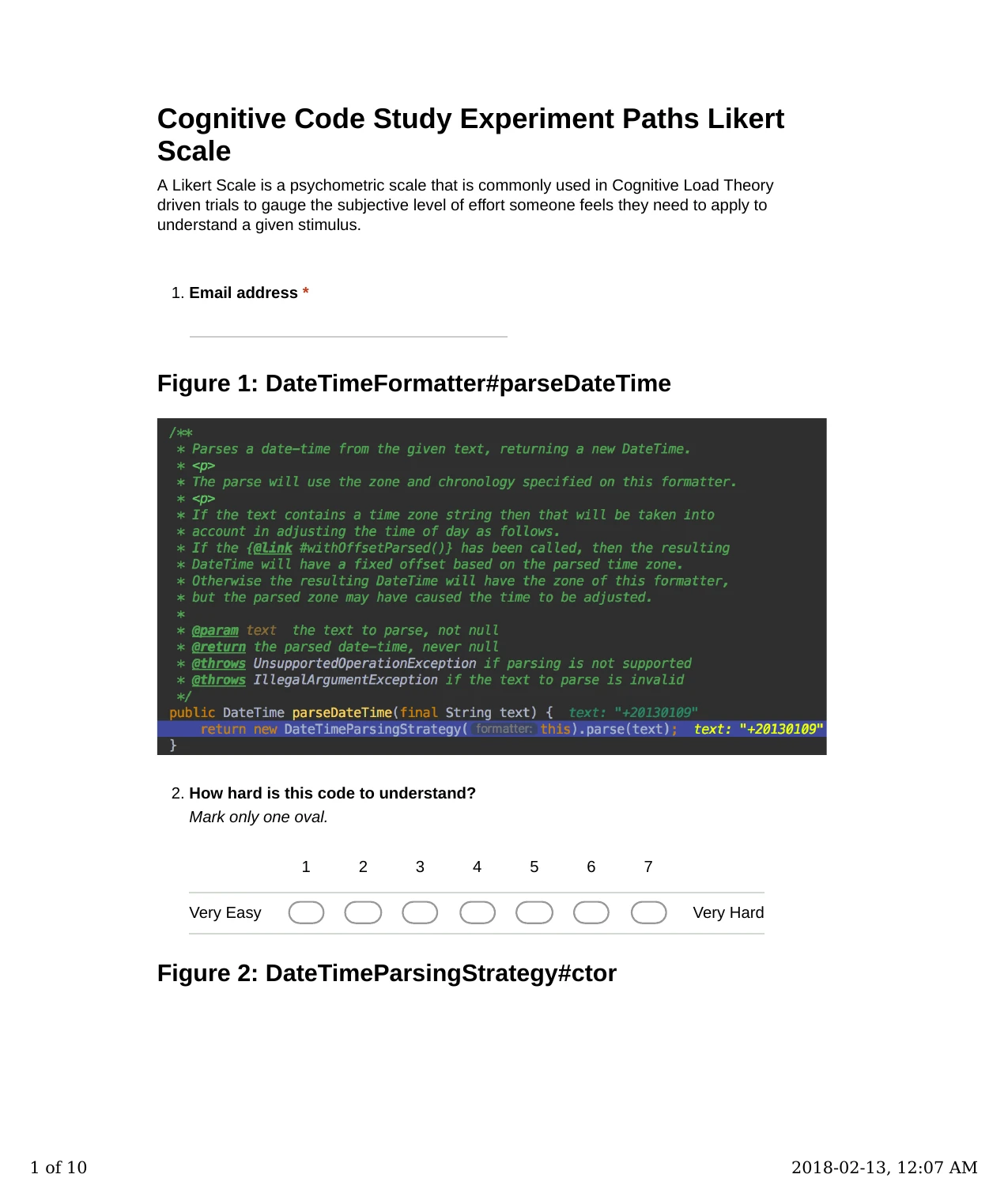
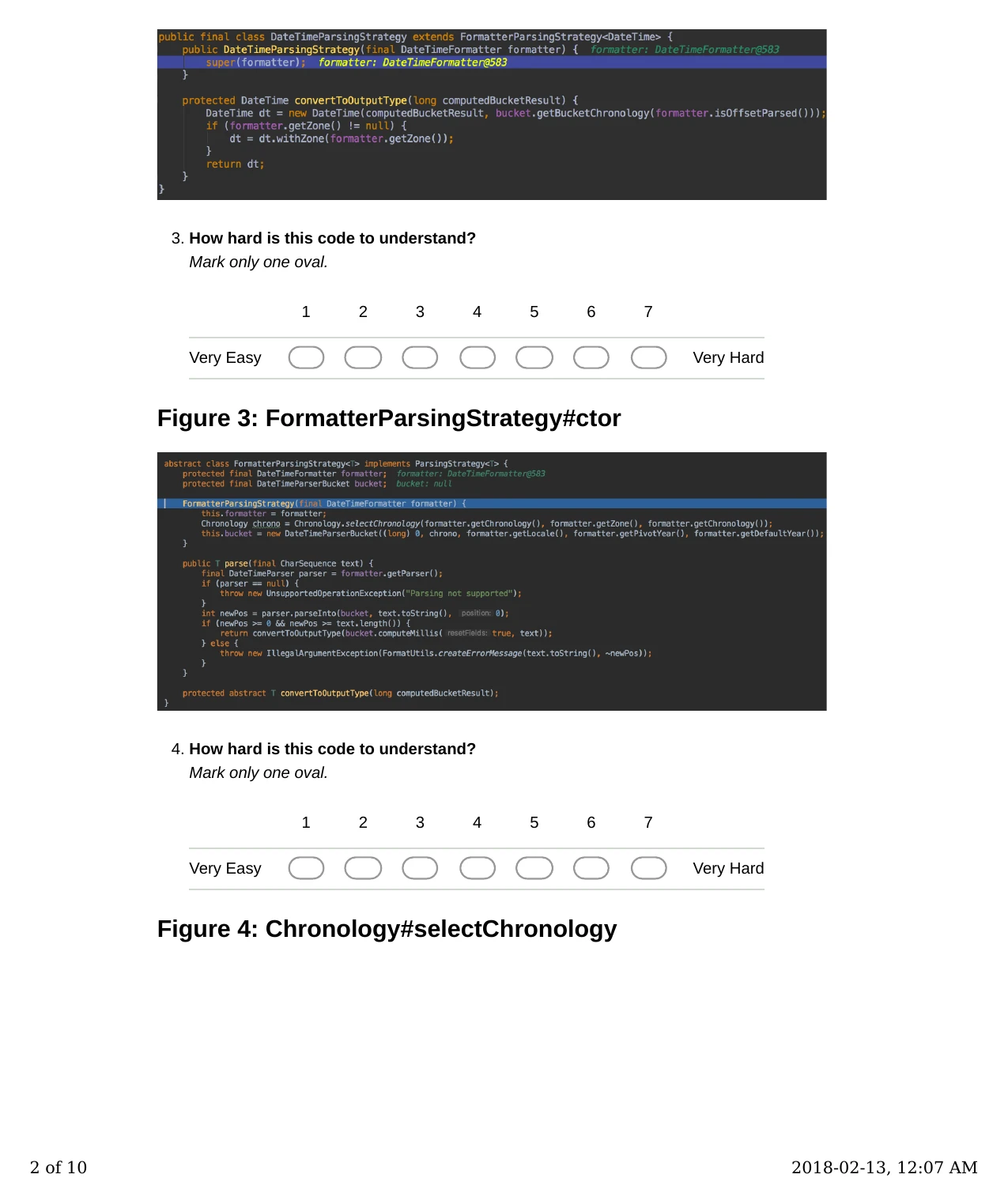
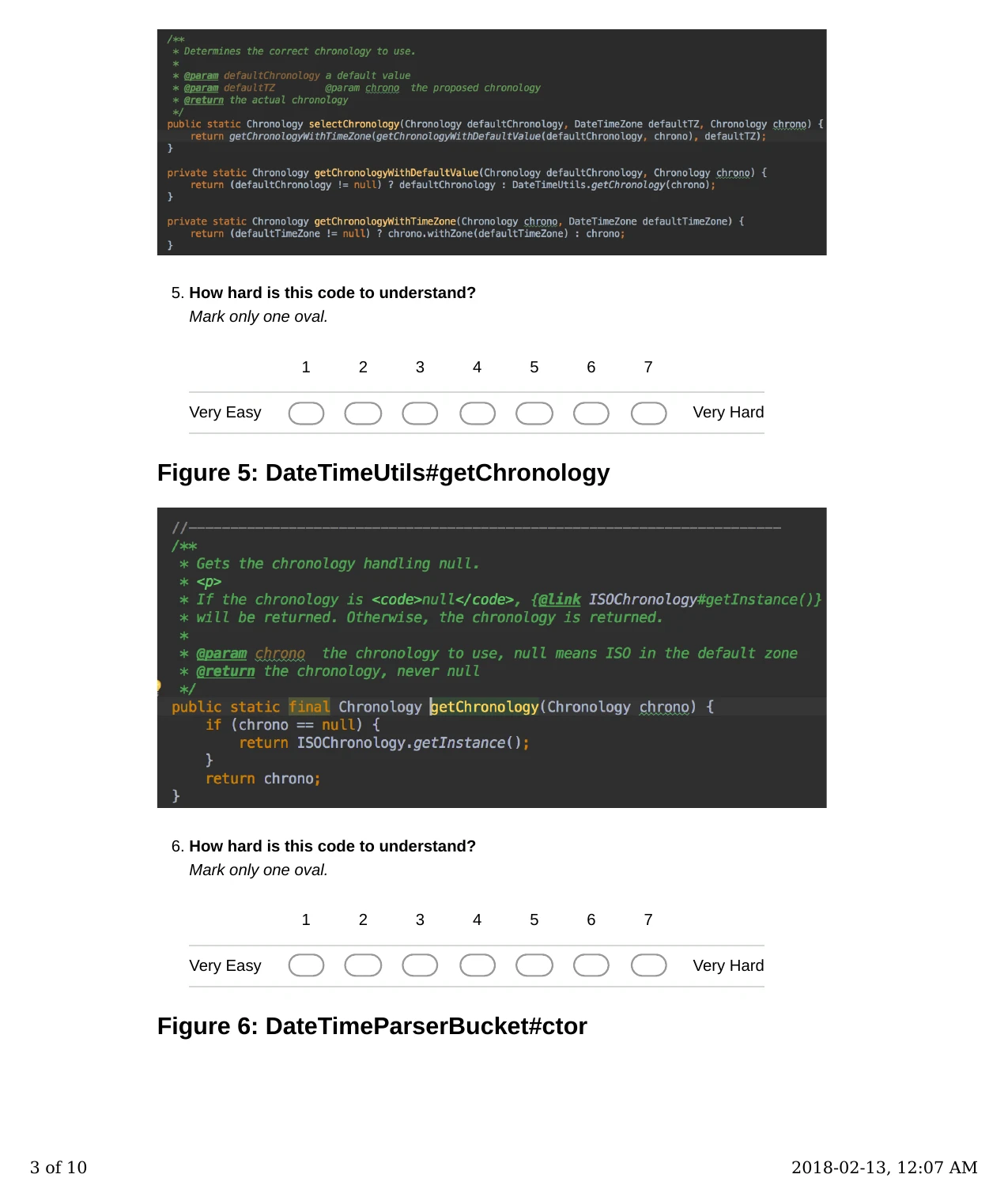
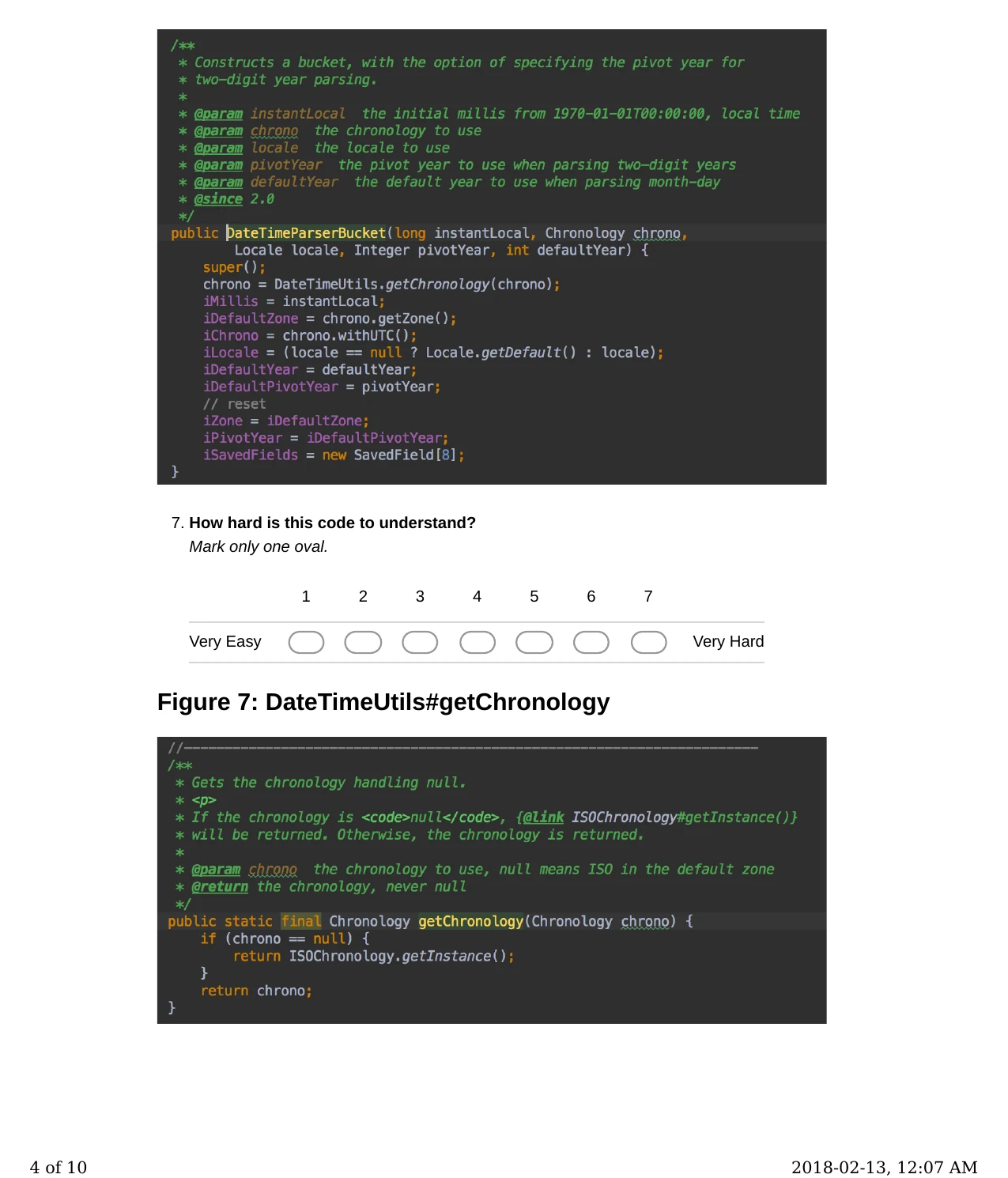
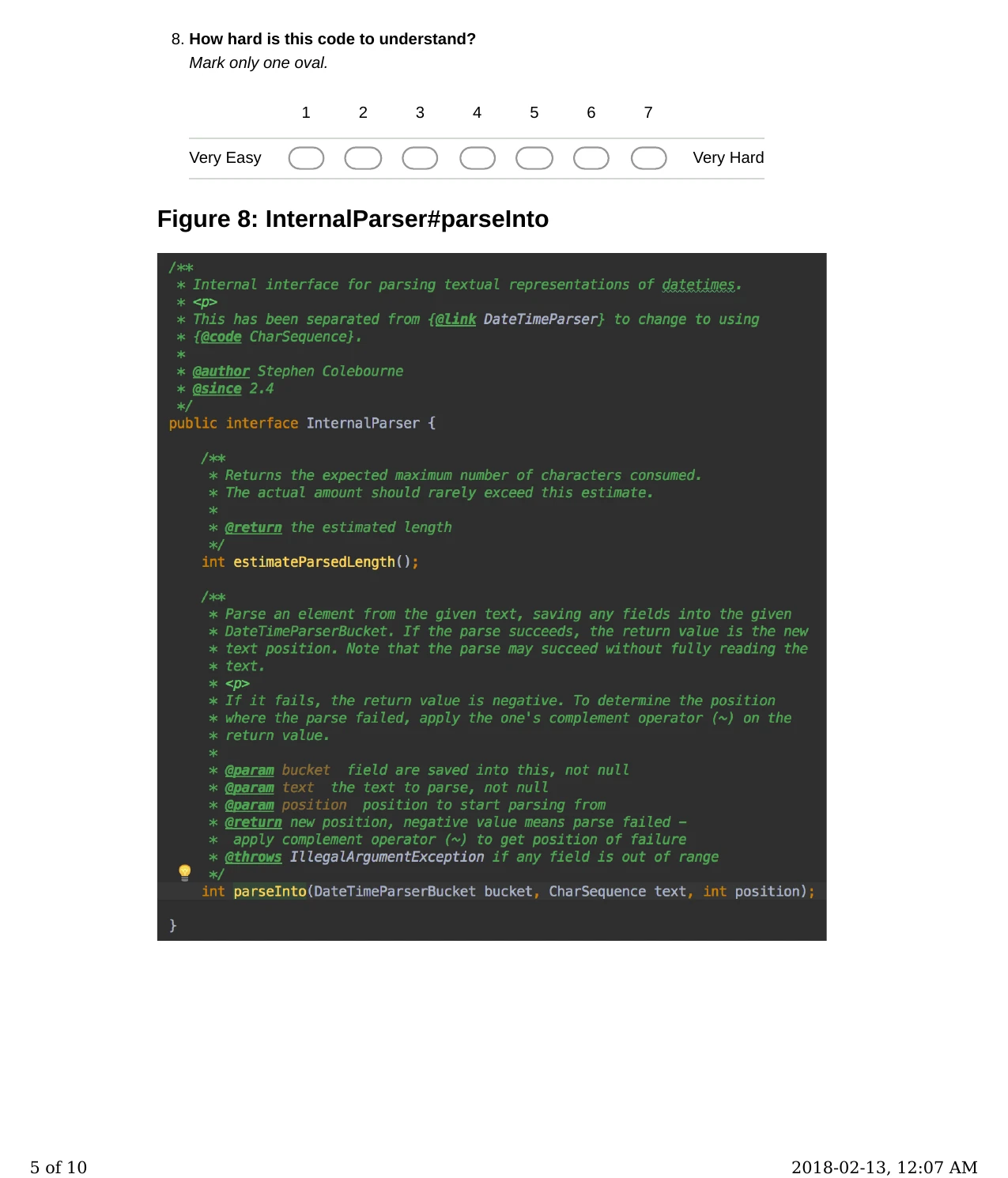
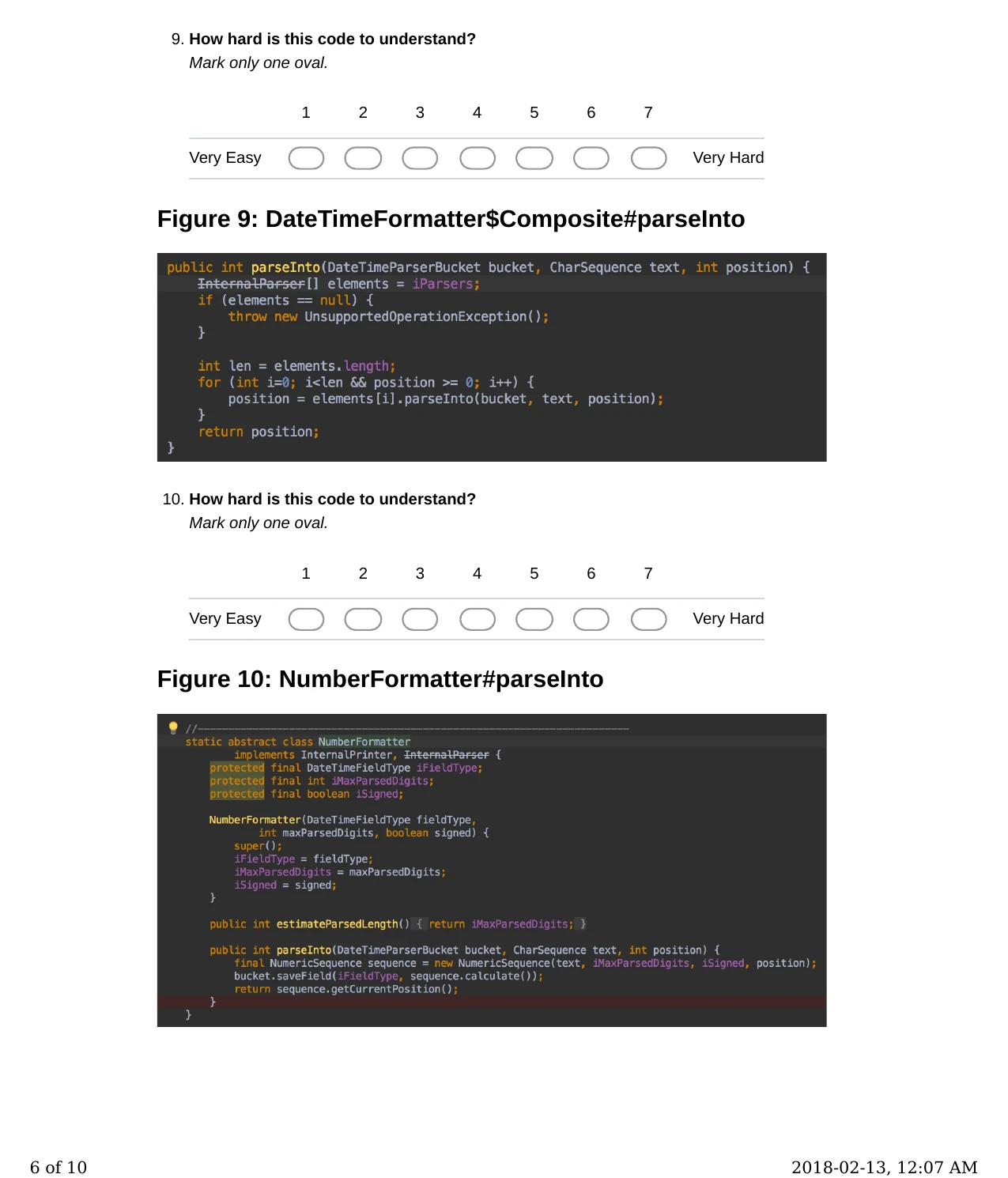
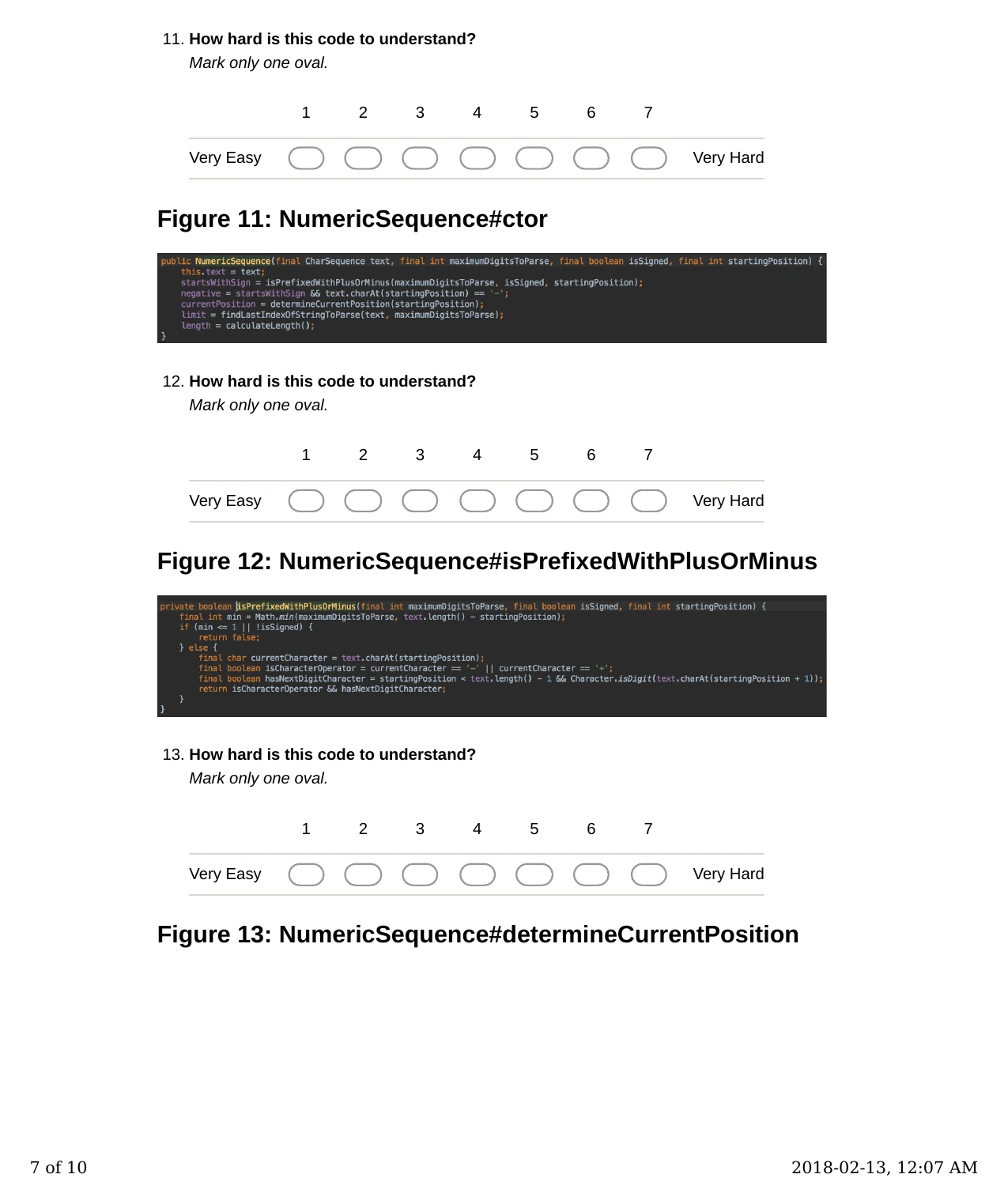
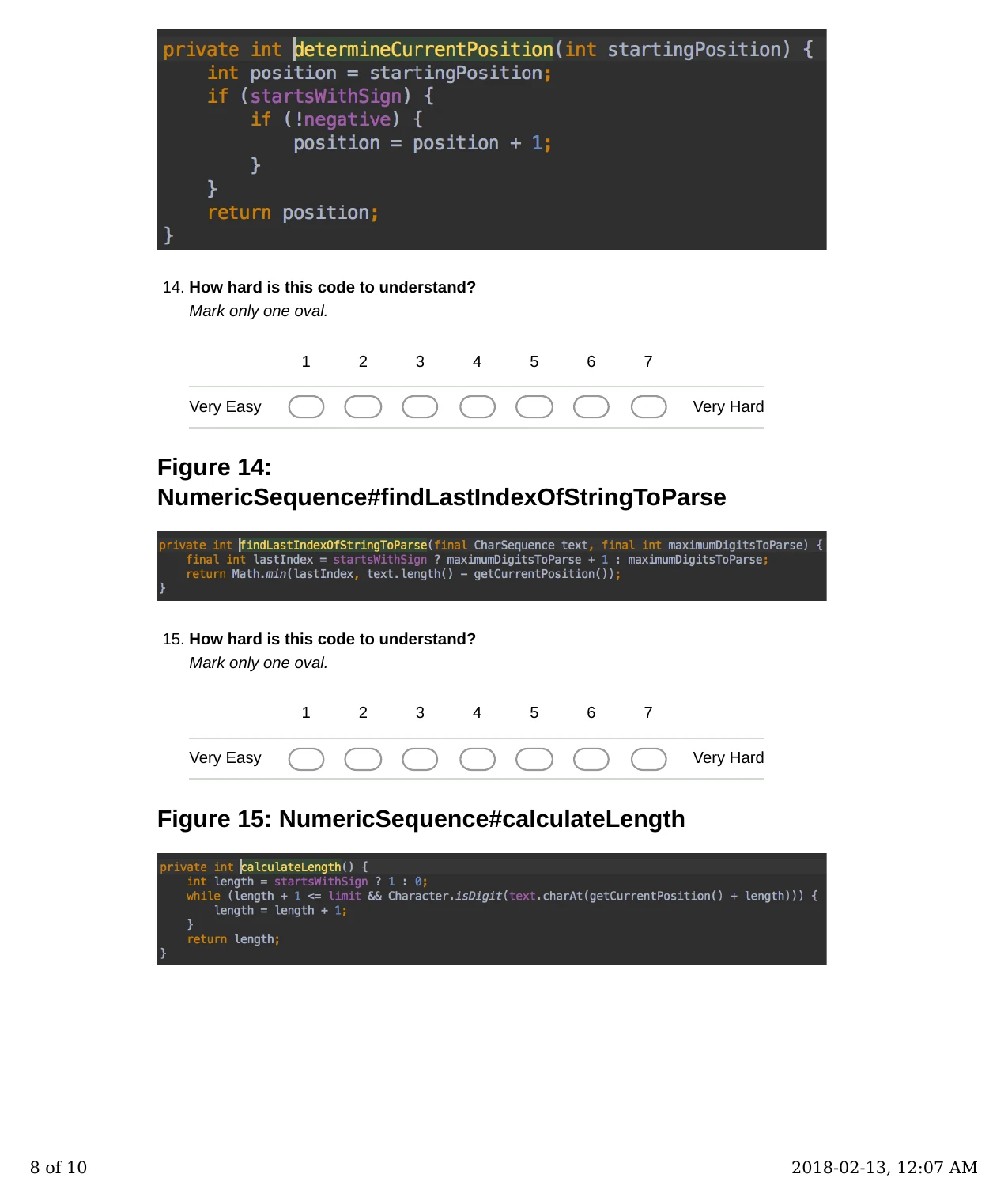
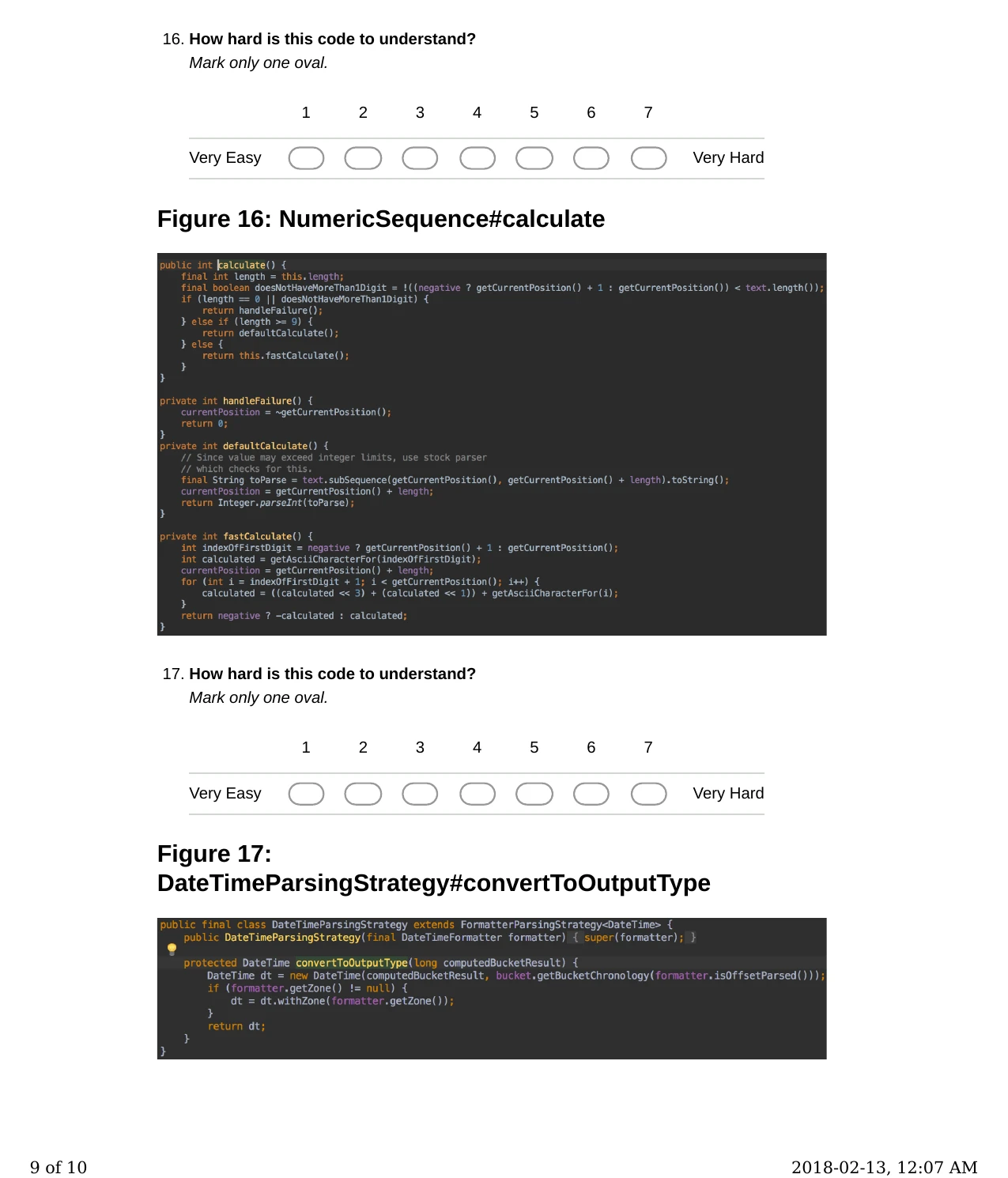
A Likert Scale is a psychometric scale that is commonly used in Cognitive Load Theory–driven trials to gauge the subjective level of effort someone feels they need to apply to understand a given stimulus. Participants assigned to the experimental cell were shown each of the seventeen code listings reproduced below — representing the same parsing pipeline as the control cell, but refactored according to the CLT-aligned principles developed in this dissertation — and asked “How hard is this code to understand?” on a seven-point Likert scale anchored at “Very Easy” (1) and “Very Hard” (7). The form also captured the participant’s email address as an identifier.
The seventeen code listings, in the order presented:
DateTimeFormatter#parseDateTimeDateTimeParsingStrategyconstructorFormatterParsingStrategyconstructor (withparse)Chronology#selectChronology(with private helpers)DateTimeUtils#getChronologyDateTimeParserBucketconstructorDateTimeUtils#getChronology(duplicate listing as shown in the original form)InternalParser#parseIntoDateTimeFormatter$Composite#parseIntoNumberFormatter#parseIntoNumericSequenceconstructorNumericSequence#isPrefixedWithPlusOrMinusNumericSequence#determineCurrentPositionNumericSequence#findLastIndexOfStringToParseNumericSequence#calculateLengthNumericSequence#calculateDateTimeParsingStrategy#convertToOutputType
The instrument was distributed via Google Forms; the rendered form, including the code listings and the Likert response widget for each, is reproduced page-by-page below.